
Sell My Printing Business Video
Yes, print shops still sell. The price depends on what kind of shop you really are.
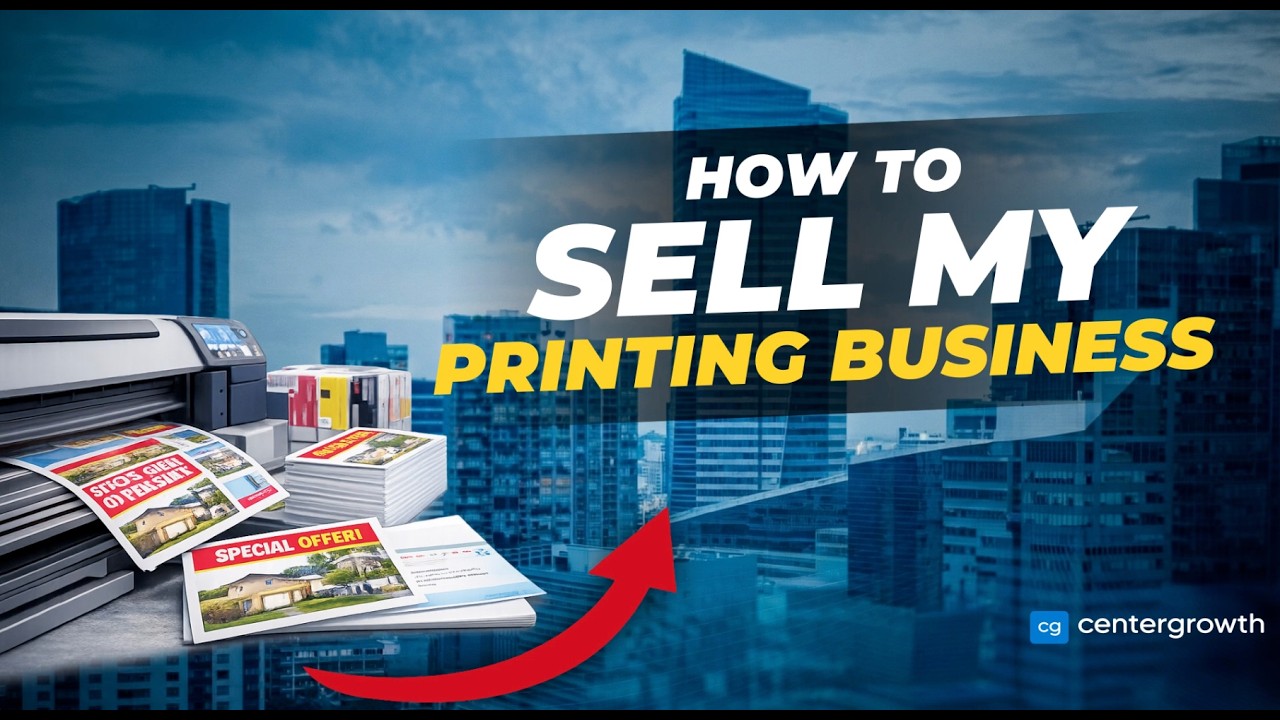
I hear it from printers all the time: nobody buys print shops anymore. It is not true, but I understand where it comes from. The industry consolidated hard, offset volume shrank, and plenty of owners watched a neighbor's shop close rather than sell. The shops that do sell, and sell well, share a few traits, and most of them can be built in a year or two. If you have been quietly searching sell my printing business, the video on this page is the honest version of what buyers in this trade are paying for now.
What a Print Shop Is Worth in a Digital-First Market
Your customer file is worth more than your pressroom
Here is the uncomfortable math: a ten-year-old offset press that cost you $600,000 might bring $60,000 at auction. Meanwhile, an account list of 400 active commercial customers with reorder history is exactly what every consolidator and neighboring shop wants and cannot easily build. Buyers of printing companies today are mostly buying the book of business. Keep your customer data clean: contact names, order history, artwork files, pricing. A shop whose estimating system holds twenty years of quotes and specs is handing the buyer the keys to the relationships, and that is the asset that gets a multiple.
Offset, digital, and wide format: the mix sets the story
A shop still dependent on long-run offset work is selling a declining annuity, and buyers price it that way. A shop that has shifted into digital short runs, variable data, wide format signage, mailing services, or apparel and promo has a growth story attached to the same customer list. You do not need every press to be new. You need the revenue trend by category to show you moved with the market. Pull three years of sales by product line before you list. If the trend is ugly, fix the mix first; it is the cheapest value improvement available to a printer.
Contract and repeat work carries the valuation
The difference between a job shop and a business is the reorder. Print management contracts, standing orders for forms and packaging, monthly newsletter and statement work, fulfillment programs where you warehouse and ship: this is the revenue a buyer can bank on. Walk through your sales and tag what recurs. If 60 percent of your volume reorders on a predictable cycle, say it in the first paragraph of your offering summary. If almost nothing recurs, your sale becomes an asset deal, and you should know that before a buyer tells you.
The equipment question printers get wrong
Owners anchor on what the iron cost. Buyers anchor on what it earns and what the leases say. Get ahead of both. List every press, cutter, folder, and finishing unit with age, click counts or impressions, and payoff amounts on any leases. Digital press leases and service contracts often transfer with restrictions, so read them now. A buyer discovering an underwater lease during diligence retrades the deal every single time. A seller who presents the equipment picture up front, warts included, keeps the negotiation on earnings where it belongs.
Do the same exercise with your top accounts. If your five biggest customers are all still ordering at the pace they did three years ago, that stability is a selling point worth documenting. If one anchor account has been drifting to an online gang printer, address it before a buyer finds it in the numbers, because they will.
Selling a printing business to a consolidator next door
The most likely buyer for many print shops is another printer within thirty miles who wants your accounts and maybe two of your operators, and will fold the work into their own plant. These tuck-in deals close fast and can pay surprisingly well, because the buyer sheds your rent and most of your overhead on day one. They are also dangerous to shop carelessly, since you are showing your customer list to a direct competitor. Use a broker, stage the disclosure, and never hand over the account detail until the money and the confidentiality teeth are real.
Your people, your continuity, your last impression
A good pressman, a prepress operator who knows every customer's quirks, a CSR the clients ask for by name: buyers want them to stay, and they want you around for a defined transition, often three to six months of customer introductions. Plan for that emotionally as well as contractually. The owners who do best treat the transition as the last job they print: on time, on spec, no surprises. It protects your earnout if there is one, and it protects the reputation you spent decades inking onto paper.
Expect the deal itself to be straightforward by business sale standards: an asset purchase, a modest working capital adjustment for paper and work in process, and a non-compete that keeps you out of commercial print in your market for a few years. Where printers get hurt is timing. Waiting until revenue has slid for three straight years hands the buyer the negotiation. Selling while the trend line still holds is worth more than any negotiating tactic I know.
Print rewarded the owners who adapted, and the exit will too. Watch the sell my printing business video above, take an honest look at your product mix and customer file, and then get a confidential opinion of value from someone who has sold shops like yours. The buyers are out there. The good ones just want to see which kind of print shop you built.
FAQ About the Sell My Printing Business Video
What does the printing business video cover?
The video runs about 6 minutes and covers how buyers look at a printing business, the factors that move valuation up or down, and the preparation that protects your price. The guide above walks the same ground in more depth.
How long is the How to Sell a Printing Business video?
About 6 minutes. It is built to be watched in one sitting, and each section of the video has a matching topic covered on this page.
Is the printing business video free to watch?
Yes. It is embedded at the top of this page and also available directly on YouTube, with no signup or payment involved.
More video guides by industry
This page is part of our Business Broker Video Directory, where video walkthroughs on selling other types of businesses are organized by industry. If you own a different kind of company, start there to find the guide that matches your niche.