
Sell My Tire Shop Video
Fleet accounts, alignment racks, and the numbers a buyer checks before he ever counts your tires
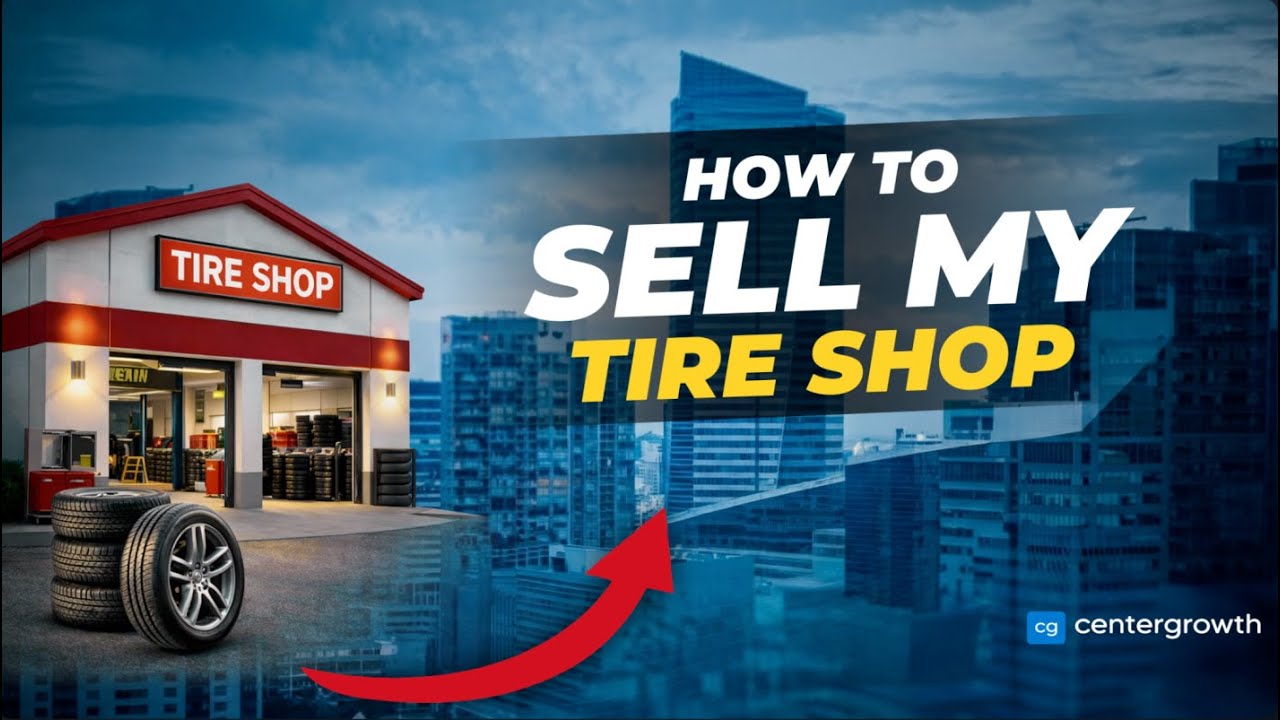
Tire shops confuse a lot of first-time sellers. The owner thinks he is selling a retail store. The buyer thinks he is buying a service business with a parts counter attached. The gap between those two views is where deals fall apart, and it is usually the seller who pays for the misunderstanding. In my sell my tire shop video I break down how buyers actually price these shops, and below I go deeper on the pieces that move your number the most.
What Determines the Selling Price of a Tire Store
Tires get people in the door, service pays the rent
The margin on a passenger tire is thin and everybody knows it. Costco and the online sellers made sure of that. What a buyer wants to see is what happens after the tire goes on. Alignments, brakes, oil changes, TPMS service, suspension work. A shop where 40 percent or more of gross profit comes from mechanical work trades at a stronger multiple than a pure tire slinger doing the same revenue.
Pull your point-of-sale reports and split revenue by category before you go to market. If you cannot show the mix, the buyer will assume the worst mix.
Supplier programs transfer, or they don't
Your dealer agreements matter more than most sellers realize. A Goodyear, Michelin, or Bridgestone program with volume rebates, co-op advertising money, and national account referrals has real value, but only if it transfers. Some programs are tied to the owner, some to the entity, some to the location. Call your rep quietly and find out where you stand before a buyer asks the question in due diligence.
Before you get deep into the process, the SBA's plain-English page on selling or closing a business is a useful companion to keep open.
Same goes for wholesale distributor terms. If you get next-morning delivery and dating from American Tire Distributors or a regional house, a new owner will usually inherit that, but the buyer wants it confirmed in writing, not assumed.
Inventory is a negotiation, so count it like one
Most tire shop deals are priced as business plus inventory at cost. Here is where sellers bleed money: dead stock. Those odd-size tires that have been on the rack for three years are not worth cost, and the buyer knows it. Do a real physical count sixty days before you list. Return what your distributor will take back, blow out the rest at cost, and go to market with clean, current inventory. A lean $80,000 of fresh stock beats a bloated $140,000 of shelf-worn rubber in every negotiation I have ever sat through.
Fleet accounts are the crown jewels
A shop with ten or fifteen commercial fleet accounts, billed monthly on terms, is a different animal from a walk-in retail store. Fleet revenue is recurring, predictable, and it arrives on weekday mornings when the bays would otherwise sit empty. Buyers pay up for it. Put together a schedule showing each account, years of history, monthly average billing, and who the contact is.
Then think about transition. Fleet managers buy from people they trust. Part of your value at closing is your willingness to walk the buyer into those relationships during a proper handoff period. Price that into your deal rather than giving it away.
Equipment, lifts, and the alignment machine
Buyers and their lenders will inventory every lift, tire changer, balancer, and compressor in the building. A late-model Hunter alignment machine alone can be a $70,000 asset, and it is also a revenue engine. Old two-post lifts with expired inspections are the opposite: a liability the buyer will use to grind your price. List every piece of equipment with year, model, and condition. Fix the cheap stuff. Disclose the rest. Surprises found during a site visit cost you triple what honest disclosure does.
Holding your own against the national chains
Every buyer will ask the same question: why does this shop survive with a Discount Tire up the road? You need a real answer. Maybe it is your mechanical capability the big boxes do not offer. Maybe it is your fleet base, your Hispanic or rural customer loyalty, your commercial truck tire work, or simply thirty years of the same phone number. Write that answer down and back it with numbers, because your defensibility is a big part of what the buyer is paying for. Customer count per month and repeat rates from your POS make the argument better than any sales pitch.
Clean books close deals
Tire shops have a cash reputation, fair or not. If your tax returns show $150,000 of owner benefit, that is the number that gets financed. Telling a buyer there is another fifty in cash sales does not raise your price, it kills your credibility and scares off the SBA lender at the same time. Spend a year or two running everything through the books before you sell. The extra tax you pay comes back two or three times over in the sale price.
The shops that sell fast and full-price all look the same on paper: category-split financials, transferable supplier programs, a documented fleet base, counted inventory, and equipment lists a lender can underwrite. None of that happens the week you decide to sell. Start assembling it now, even if selling is two years out, and watch the sell my tire shop video for the full walkthrough of pricing, buyer types, and deal structure in this trade.
FAQ About the Sell My Tire Shop Video
What does the tire shop video cover?
The video runs about 5 minutes and covers how buyers look at a tire shop, the factors that move valuation up or down, and the preparation that protects your price. The guide above walks the same ground in more depth.
Who made the tire shop video?
It comes from Business Broker Leads, a YouTube channel that publishes guides on selling specific types of businesses along with broker directories by state and industry.
Will the video tell me exactly what my tire shop is worth?
It explains how buyers arrive at a number, which is the part most owners get wrong. For a figure specific to your company you would still want a broker or valuation professional to review your actual financials.
More video guides by industry
This page is part of our Business Broker Video Directory, where video walkthroughs on selling other types of businesses are organized by industry. If you own a different kind of company, start there to find the guide that matches your niche.